Residential & Commercial EV Charging Solutions
EV Charger Installation
Professional Level 2 home EV charger installation for Tesla, Ford, Chevy, and all electric vehicles. Tesla Certified Installer George Koletas (License #E422) ensures safe, code-compliant charging solutions that meet NEC Article 625 requirements throughout the Capital Region, NY.
Ready to charge your electric vehicle at home? A Level 2 EV charger transforms your garage into a personal charging station—wake up every morning with a full battery and eliminate range anxiety forever. Licensed Master Electrician George Koletas (License #E422) and the team at Koletas Electric specialize in professional EV charger installations throughout the Capital Region, NY. As a Tesla Certified Installer and IBEW Local 236 member, George ensures every installation meets the latest electrical codes and manufacturer specifications for safe, reliable home charging.
2023 NEC Article 625 Compliant: All EV charger installations meet current National Electrical Code Article 625 requirements adopted by New York State on December 31, 2025, including dedicated circuit requirements, proper GFCI protection, UL-listed equipment specifications, and dedicated 40-50 amp circuits for Level 2 charging systems.
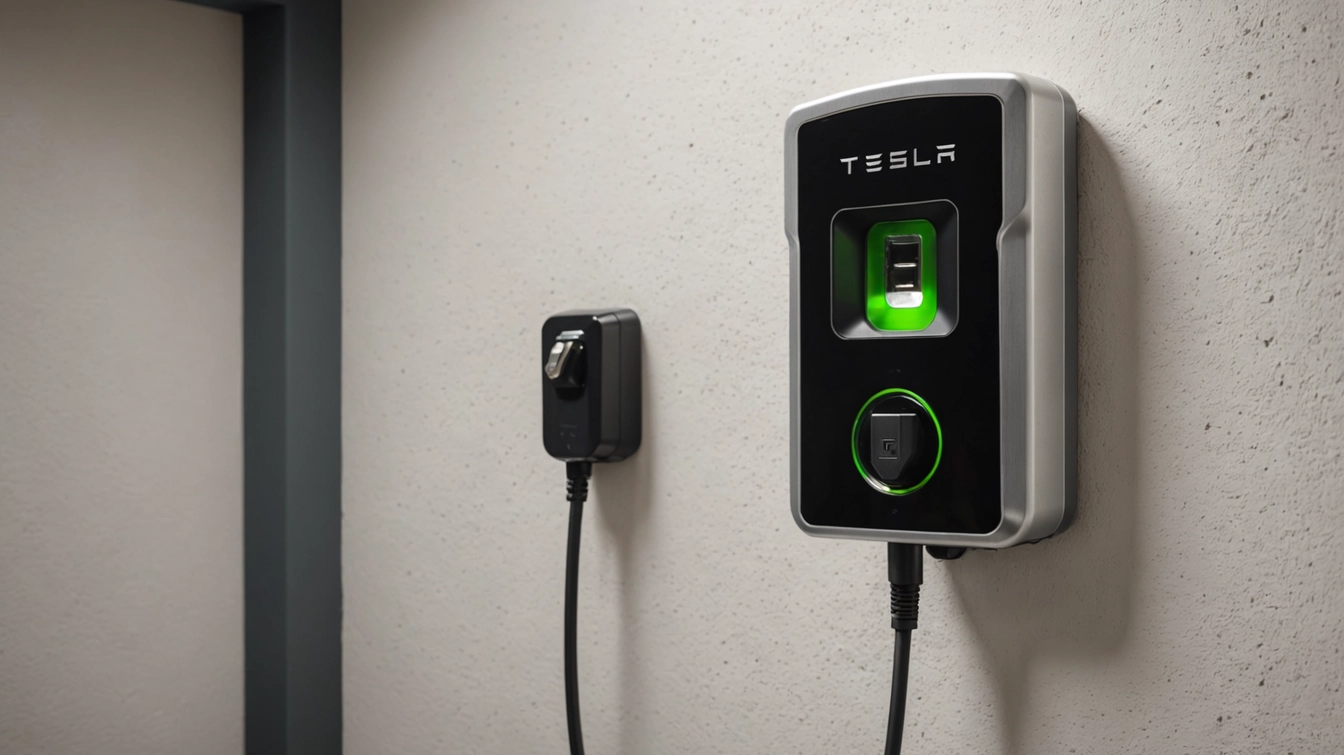
Professional Level 2 EV charger installation completed by Tesla Certified Installer George Koletas
Why Install a Home EV Charger?
While every electric vehicle comes with a Level 1 charger that plugs into a standard 120-volt outlet, this method is painfully slow—adding only 3-5 miles of range per hour. A Level 2 home charger delivers 25-45 miles of range per hour, meaning you can fully charge your vehicle overnight while you sleep. Here’s why upgrading to professional Level 2 charging makes sense:
⚡
8x Faster Charging Speed
Level 2 chargers use a 240-volt circuit (same as your dryer or oven) to deliver 7-11 kW of power. Charge your EV from empty to full in 4-8 hours instead of 24+ hours with a standard outlet.
💰
Save Money on Fuel Costs
Home charging costs approximately $0.13 per kWh compared to $0.25-$0.50 per kWh at public fast chargers. Charge overnight during off-peak hours to maximize savings—most EV owners save $1,000+ annually.
🏠
Ultimate Convenience
Wake up every morning with a full battery. No more searching for charging stations, waiting in line, or planning routes around charger locations. Your home becomes your personal fueling station.
🔋
Better for Battery Health
Consistent Level 2 AC charging at home is gentler on your battery than frequent DC fast charging. Slower, steady charging generates less heat and helps maintain optimal battery longevity.
📈
Increase Home Value
As EV adoption grows, more homebuyers are looking for EV-ready properties. A professionally installed Level 2 charger makes your home more attractive and can increase resale value.
🏆
Tax Credits Available
Understanding EV Charger Levels
Not all EV chargers are created equal. Understanding the differences helps you choose the right solution for your needs:
Charger Level | Voltage | Range Per Hour | Full Charge Time |
|---|---|---|---|
Level 1 (Standard Outlet) | 120V | 3-5 Miles | 40-50+ hours |
Level 2 (Home Charger) | 240V | 25-45 miles | 4-8 hours |
Level 3 (DC Fast Charger) | 480V+ | 100+ Miles | 20-40 min to 80% |
Level 2 is the ideal choice for home charging—it provides the perfect balance of speed, cost, and battery health. Level 3 DC fast chargers require commercial electrical infrastructure and are not suitable for residential installation.
Chargers & Vehicles We Support
Level 2 is the ideal choice for home charging—it provides the perfect balance of speed, cost, and battery health. Level 3 DC fast chargers require commercial electrical infrastructure and are not suitable for residential installation.
EV Charger Brands:
- Tesla Wall Connector
- Chargepoint
- JuiceBox
- Emporia
- Grizzl-E
- Wallbox
- ClipperCreek
- Lectron
Electric Vehicles (Examples):
- Tesla (Model 3, Y, S, X)
- Ford (Mustand Mach-E, F-150 Lighting)
- Chevrolet (Bolt, Equinox EV)
- Rivian
- Hyundai (Ioniq 5, 6)
- Kia (EV6, EV9)
- BMW iX
- Mercedes EQ
- Volkswagen ID.4
- Nissan Leaf
- Lucid
- Polestar
- 🔌 Does Your Home Have Adequate Electrical Capacity?
Most Level 2 EV chargers require a dedicated 240-volt, 40-60 amp circuit. Before installation, George Koletas will assess your electrical panel to ensure it can support the additional load. Common considerations include:
- Current panel capacity (100A, 150A, or 200A service)
- Available breaker slots for new dedicated circuit
- Distance from panel to charger location
- Whether a panel upgrade or subpanel is needed
- Load management options if capacity is limited
Don’t worry if your panel needs an upgrade—Koletas Electric specializes in electrical panel upgrades and can handle the complete project from start to finish.
Our EV Charger Installation Services
Koletas Electric offers comprehensive EV charging solutions for residential and commercial properties:
Residential Level 2 Charger Installation
Our most popular service—professional installation of a Level 2 home EV charger in your garage, carport, or driveway. This includes electrical assessment, dedicated 240-volt circuit installation, charger mounting, cable management, testing, and all required permits and inspections. Most residential installations are completed in a single day.
Tesla Wall Connector Installation
As a Tesla Certified Installer, George Koletas has completed specialized training on Tesla Wall Connector installation. We ensure your Tesla charger is installed according to Tesla’s specifications, with proper electrical connections, optimal placement, and Wi-Fi setup for app connectivity. Tesla Wall Connectors deliver up to 44 miles of range per hour—the fastest home charging option for Tesla vehicles.
Hardwired vs. Plug-In Installation
EV chargers can be installed as hardwired (permanently connected to your electrical system) or plug-in (using a NEMA 14-50 or 6-50 outlet). Hardwired installations are more permanent and often support higher amperage, while plug-in installations offer flexibility if you want to take your charger when moving. George will recommend the best approach based on your needs and charger specifications.
Outdoor & Pedestal Installation
Don’t have a garage? We install weatherproof EV chargers in outdoor locations including driveways, carports, and parking areas. Outdoor installations use weather-rated equipment with proper conduit protection and meet NEC requirements for wet locations. Pedestal mounting options are available for standalone installations away from structures.
LOAD MANAGEMENT SOLUTIONS
If your electrical panel doesn’t have capacity for a full 50-amp EV circuit, we offer load management solutions that allow EV charging without a panel upgrade. Smart chargers with adjustable amperage settings or energy management systems can share capacity with other circuits, reducing installation costs while still providing convenient home charging.
Commercial EV Charging
We also provide EV charging solutions for businesses, including workplace charging stations, multi-unit residential properties, retail locations, and fleet charging facilities. Commercial installations may include multiple charging stations, networked management systems, and coordination with utility companies for demand charges. Contact us to discuss your commercial EV charging needs.
The Koletas Electric EV Charger Installation Process
Our systematic approach ensures safe, efficient, and code-compliant EV charger installation every time:
- Free Consultation & Site Assessment: George Koletas personally evaluates your electrical system, inspects your panel capacity, measures the distance to your desired charger location, and discusses your EV charging needs. We provide honest recommendations on the best charger and installation approach for your situation.
- Detailed Estimate & Charger Selection: Receive upfront pricing with no hidden fees. If you haven’t already purchased a charger, we can recommend options based on your vehicle, budget, and desired features. We explain the complete scope of work before starting.
- Permit Application: EV charger installations require electrical permits in the Capital Region. We handle all permit applications with local building departments to ensure your installation meets NEC Article 625 requirements.
- Professional Installation: Our licensed electrician installs the dedicated 240-volt circuit from your panel to the charger location, mounts the charger at proper height per NEC 625.102 (minimum 18″ indoors, 24″ outdoors), connects and tests all wiring, and sets up any smart features or Wi-Fi connectivity.
- Testing & Inspection: Every installation is thoroughly tested for proper operation, including voltage verification, GFCI function, and a test charge of your vehicle. We schedule and coordinate the final municipal inspection.
- Demonstration & Documentation: We show you how to operate your new charger, explain any app features or scheduling options, and provide complete documentation including permits, inspection certificates, and warranty information. We also help you understand available tax credits and rebates.
Why Choose Koletas Electric?
When it comes to EV charger installation, experience and expertise matter. Here’s why Capital Region EV owners trust George Koletas:
- Tesla Certified Installer: George Koletas has completed Tesla’s specialized training program for Wall Connector installation. This certification ensures your Tesla charger is installed according to manufacturer specifications for optimal performance and warranty protection.
- Licensed Master Electrician: George holds Master Electrician License #E422 from the City of Troy, NY, with 15+ years of experience. All installations meet 2023 National Electrical Code standards and NEC Article 625 requirements for electric vehicle charging systems.
- IBEW Local 236 Union Member: As a member of IBEW Local 236, George has access to continuous professional training including OSHA safety certification, NEC code updates, and specialized training in EV charging systems, solar installations, and building automation.
- Panel Upgrade Expertise: If your home needs additional electrical capacity for EV charging, we handle complete panel upgrades in-house. One contractor, one project, seamless execution.
- Upfront Pricing: No surprises, no hidden fees. You’ll know the total cost before we begin work. Our estimates are detailed, fair, and competitive.
- Local Family-Owned Business: Unlike national chains or app-based installers, we’re invested in our community. We live and work in the Capital Region and stand behind every job we complete.
- All Permits & Inspections Included: We handle the complete permit process and coordinate all required inspections. Never hire an electrician who suggests skipping permits—it’s illegal, voids insurance coverage, and creates liability for you as the homeowner.
Tax Credits & Incentives
Make your EV charger installation more affordable with available federal tax credits and utility incentives. Act now—the federal tax credit expires June 30, 2026.
- 💰 Federal Tax Credit (30C) – Expires June 30, 2026
Homeowners in eligible areas may receive up to 30% back (up to $1,000) on the total cost of EV charger equipment and installation through the Alternative Fuel Vehicle Refueling Property Credit.
- What’s covered: Charger equipment, installation labor, wiring, dedicated circuits, and panel upgrades directly related to the charger
- Eligibility: Your home must be in a non-urban or low-income census tract (many Capital Region communities qualify, including Troy, Schaghticoke, Waterford, and rural areas)
- How to check: Use the DOE 30C Eligibility Locator to verify your address
- How to claim: File IRS Form 8911 with your federal tax return
⚠️ Important: This credit is non-refundable—it reduces taxes owed but won’t result in a refund. The credit was originally set to expire in 2032 but was accelerated to June 30, 2026 under the One Big Beautiful Bill Act (July 2025). Consult your tax advisor for eligibility.
New York State Incentives
NYS Business Tax Credit
Businesses installing EV chargers at commercial properties may receive a state tax credit of up to $5,000 per charging station or 50% of the cost, whichever is less. This credit applies to chargers used in a trade or business and can be carried forward indefinitely. Learn more at NY Tax Department →
Charge Ready NY 2.0 (Commercial/Multifamily)
Workplaces, hotels, and multifamily properties can receive $3,000–$4,000 per charging port through NYSERDA's Charge Ready NY 2.0 program. Properties in disadvantaged communities qualify for additional incentives. Note: This program is for commercial/multifamily properties, not single-family homes. Apply at NYSERDA →
No State Residential Rebate
Unfortunately, New York State does not currently offer a rebate program specifically for residential home EV charger installations. However, homeowners can still take advantage of the federal tax credit (above) and utility incentives (below).
Capital Region Utility Incentives (National Grid)
Charge Smart NY – Monthly Charging Incentives
National Grid residential customers can earn up to $24/month (plus a $25 enrollment bonus after 3 months) by charging during off-peak hours (11 PM–7 AM) through the Charge Smart NY program. Requires a compatible EV or smart charger—works great with Tesla Wall Connectors and other smart chargers we install. Enroll at National Grid →
Make-Ready Program (Commercial)
Businesses can receive up to 100% of electric infrastructure costs covered for approved commercial EV charging installations through National Grid's Make-Ready Program. This significantly reduces the cost of adding EV charging to your business, workplace, or multifamily property. Learn more →
Frequently Asked Questions
How much does EV charger installation cost?
How long does installation take?
Do I need to upgrade my electrical panel for an EV charger?
Can I install an EV charger myself?
Do I need a permit for EV charger installation?
What's the difference between hardwired and plug-in EV chargers?
Can I charge my EV with a regular outlet?
Will charging my EV increase my electric bill significantly?
Can an EV charger be installed outdoors?
Are there tax credits or rebates for EV charger installation?
Additionally, businesses can receive a NYS tax credit of up to $5,000 or 50% of costs for commercial EV charger installations. National Grid customers can also enroll in Charge Smart NY to earn $24/month for off-peak charging.
Unfortunately, there is no New York State rebate for residential home EV chargers—but the federal credit and utility incentives still provide meaningful savings. We provide detailed invoices to help you claim all available credits. See our full Tax Credits & Incentives section above →
Serving the Capital Region, NY
Koletas Electric provides professional EV charger installation throughout the Capital Region of New York. Whether you’re a new Tesla owner in Albany, just picked up a Ford F-150 Lightning in Saratoga Springs, or have a Chevy Bolt in Troy, George Koletas delivers the same commitment to quality, safety, and customer satisfaction that has built our reputation as the area’s trusted electrical contractor.
Ready to make the switch to convenient home EV charging? Contact us today for your free consultation and estimate. Join the thousands of Capital Region EV owners who wake up every morning with a full battery.
Ready to Upgrade?
Get a free, no-obligation estimate from Licensed Master Electrician George Koletas (License #E422). IBEW Local 236 member with 15+ years of experience.
- Licensed Master Electrician #E422
- Same-Day Emergency Service
- Upfront Pricing, No Hidden Fees
- Family-Owned Local Business
- IBEW Local 236 Union Member
- All Permits & Inspections Included
Licensed
Insured
Bonded
Related Services
- Panel & Service Upgrades
- Generator Installation
- Outlets & Switches
- Electrical Safety Inspections
- Emergency Electrical Service